
The Conservative Movement Was Ready For Antonin Scalia’s Death
The sequence of events kicked off by Scalia’s passing a decade ago might feel improbable. But the right was waiting for its chance to capture the Court, and didn’t let it go to waste.

In retrospect, the wildest thing about Justice Antonin Scalia’s death ten years ago today is that, for about 45 minutes, it really seemed like the good guys were going to win. Over the preceding 47 years, Democratic presidents had appointed exactly four justices to the Supreme Court, compared to 12 for Republican presidents. As a result, conservatives had comfortably controlled the Court throughout that period. Only the ideological defections of Justice John Paul Stevens and David Souter—Republican appointees who turned out to be staunch liberals, to the everlasting fury of Federalist Society types everywhere—kept the Court from morphing from a reliably conservative institution into a reactionary juggernaut.
Scalia’s sudden departure, both from the bench and from this mortal coil, was poised to change everything. With President Barack Obama set to replace Scalia with a fiftysomething liberal lawyer to be named later, the Court would have a solid liberal majority for the first time since the Warren Court era ended almost five decades earlier.
I was still working as a law firm associate then, so I don’t have a good journalism war story to share from that day. But I could do basic math, and the penciled-in results looked promising: Roe v. Wade was safe. So was affirmative action. The Voting Rights Act, which Chief Justice John Roberts had gutted in Shelby County v. Holder, seemed on the verge of making a dramatic comeback. The conservative push to rewrite the Second Amendment to comport with the gun lobby’s financial interests was over. Citizens United, which the Republican justices had used to open up corporate spending in elections in 2010, was surely on borrowed time.
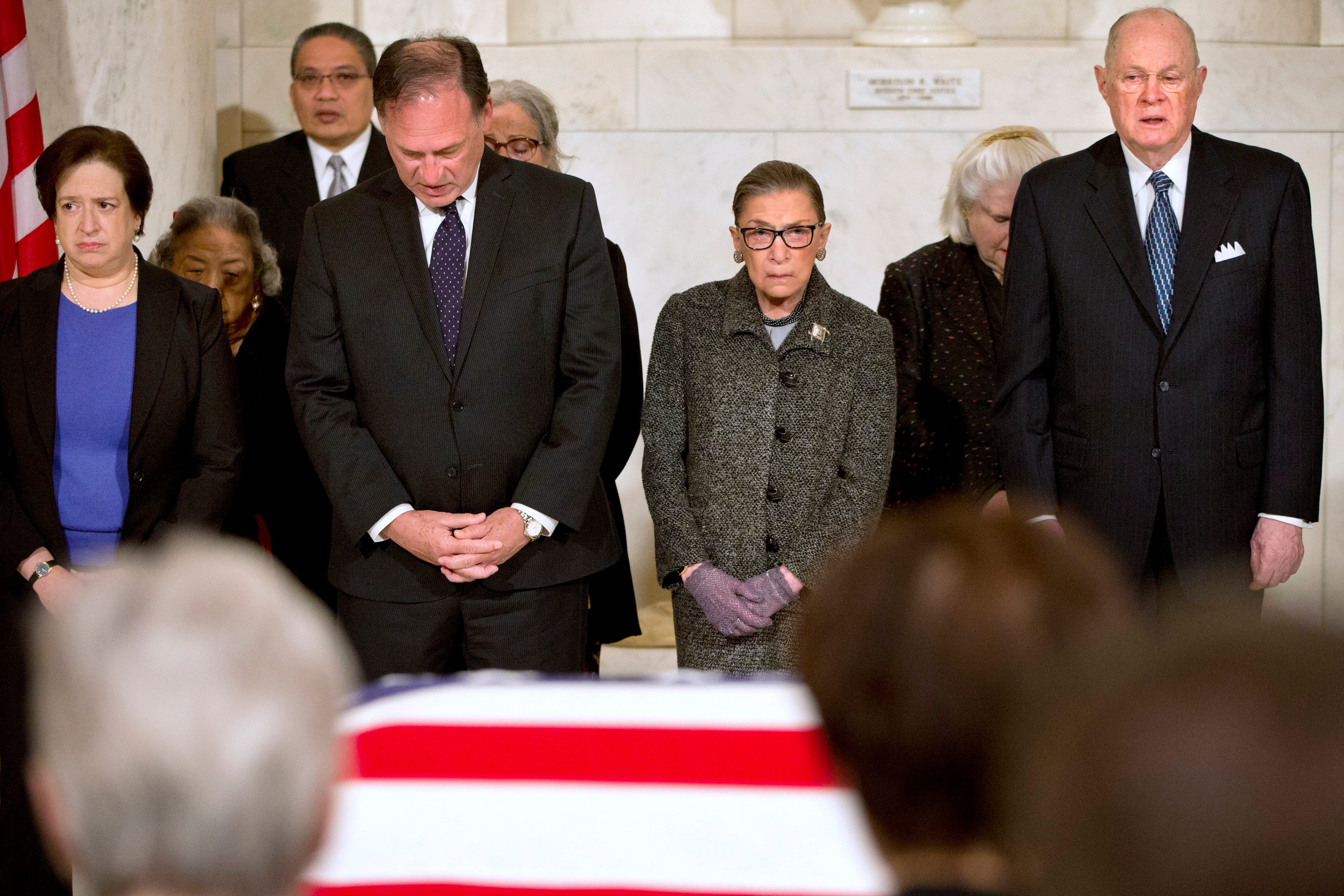
Before most people even saw the New York Times push alert announcing Scalia’s death, though, Senate Majority Leader Mitch McConnell made his move, announcing that the Senate would not consider any potential replacement until after the 2016 election, which was set to take place in nine months. At the time, most Democratic politicians were still cobbling together statements extending their condolences to Scalia’s family. McConnell, meanwhile, managed to unite his entire caucus around a rule he’d invented out of thin air: that the Senate need not fulfill its constitutionally prescribed duty to provide “advice and consent” on a Supreme Court nomination if Republicans don’t like the president who made it.
A senior White House official told Politico that McConnell’s statement was a “real shocker”; Hillary Clinton, who would become the Democratic nominee a few months later, called it “outrageous.” In one sense, they were right; there was zero precedent for McConnell’s stunt, which made his confidence that it would work feel kind of surreal. A certain howling idiot even predicted that the whole thing would backfire spectacularly, since, after Clinton defeated the presumed Republican nominee, Donald Trump, in the 2016 presidential election, she and the inevitable filibuster-proof Democratic Senate majority would be free to confirm a far more liberal nominee than whomever Obama would pick.
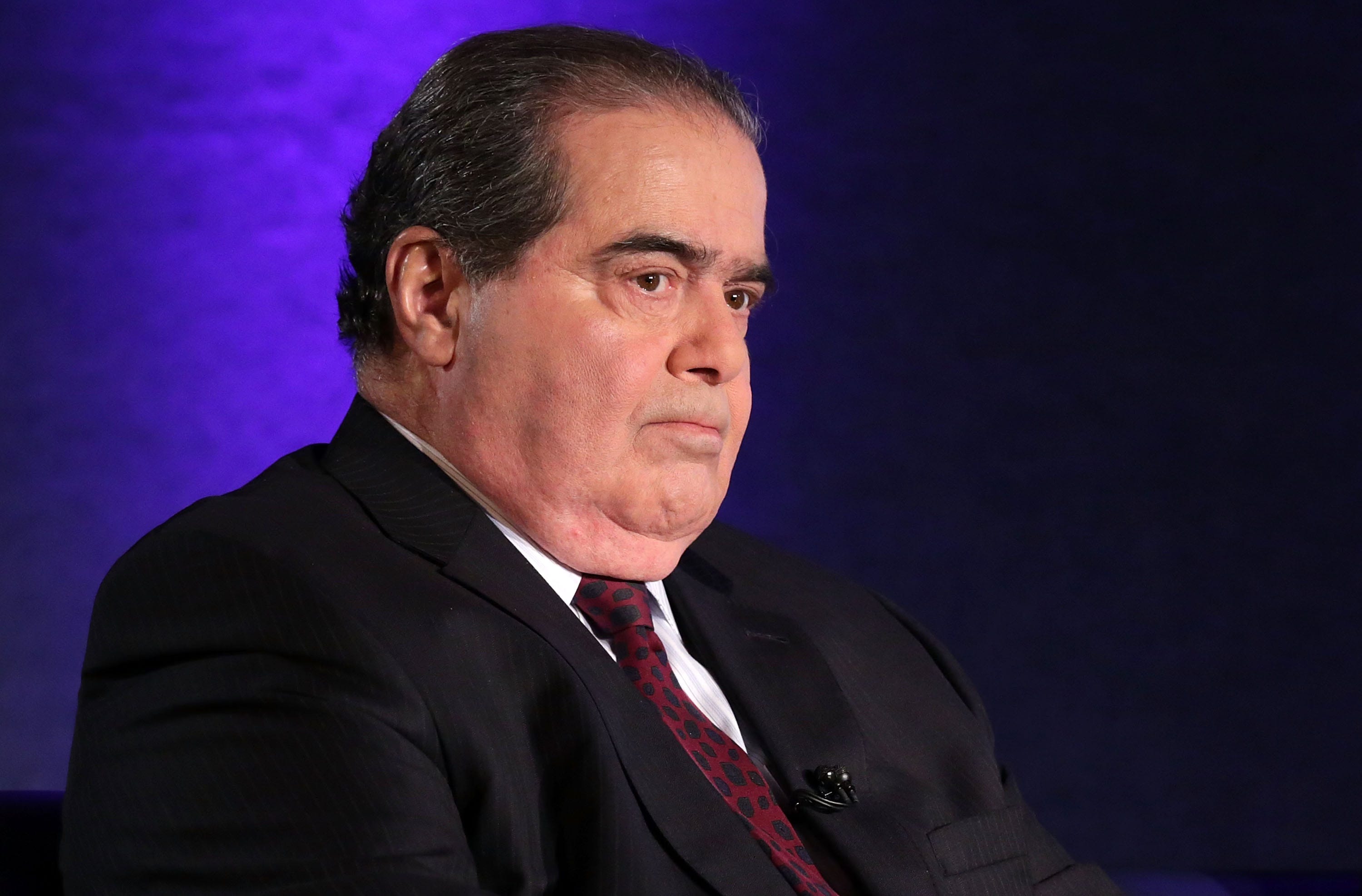
The rest, as they say, is history. McConnell’s blockade held, and Obama’s nominee, the moderate appeals court judge Merrick Garland, never got a hearing in the Senate, let alone a vote. Trump won the 2016 election and nominated Neil Gorsuch to replace Scalia, and McConnell blew up the filibuster to allow Republicans to confirm Gorsuch without getting to 60 votes. In 2018, Justice Anthony Kennedy’s retirement and Brett Kavanaugh’s confirmation pushed the Court even further to the right. In 2020, the death of Justice Ruth Bader Ginsburg and McConnell’s push to speed-run Amy Coney Barrett’s confirmation turned a five-justice conservative majority into the six-justice conservative supermajority we all know and hate.
The jurisprudential fallout has been equal parts predictable and grim. The Court overturned Roe in 2022, and got rid of affirmative action in 2023. Bruen, the 2022 decision that froze the Second Amendment’s meaning to what conservative academics imagined it to be centuries earlier, has made it functionally impossible for modern lawmakers to protect their constituents from the scourge of gun violence. The Court will probably kill off what remains of the Voting Rights Act this summer. Dark money groups empowered by Citizens United spent nearly $2 billion during the 2024 election cycle. Trump won a second term in office thanks in large part to the Court’s willingness to put him on the ballot, and to grant him immunity for crimes he’d previously committed in office, as well as crimes he might commit in office in the future.
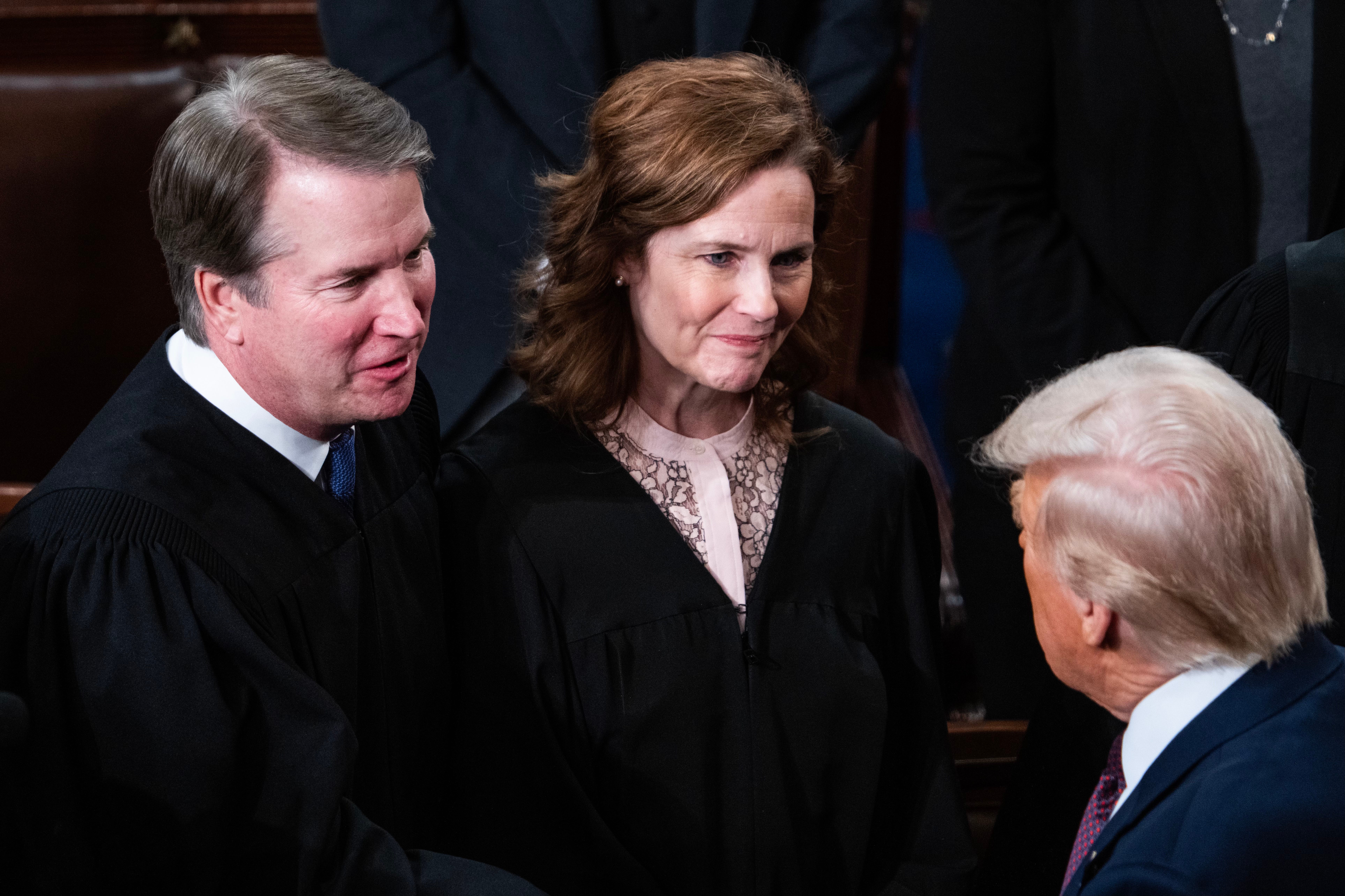
Given that the conservative legal movement essentially drew an inside straight here, it can be tempting for anyone to the left of Mitt Romney to chalk up the sequence of events that began with Scalia’s death to very, very bad luck. If Scalia had died a little earlier, or if Ginsburg had died a little later (or simply retired in 2014), or if Clinton had won the 2016 election, the Court might look very different today, and so would the legal landscape it shapes.
But it is also true that when its big break came, the conservative legal movement was ready to take advantage. McConnell, who understood the power of a solidly conservative Court standing athwart history yelling “stop,” vowed to keep Scalia’s seat open; the Republican senators who’d spent their careers steeped in die-hard anti-choice politics obediently lined up behind him. The Federalist Society, whose leaders more or less ran the first Trump White House’s judicial nominations process, ensured that Scalia’s and Kennedy’s replacements would not follow in Stevens’s and Souter’s footsteps. And when Ginsburg died less than two months before the 2020 election, McConnell cheerfully abandoned his “no new justices” rule, ensuring that even if Trump lost, the Court he built could stack wins for generations to come.
Although the force of the Republican Party’s response to Scalia’s death felt like a “shocker” to some, the reality is that the right had been quietly putting in the work—of building a judicial pipeline, of championing a particular vision for the Constitution, and of making sure the base understood the stakes of every Supreme Court vacancy—for a long time. The left had not.
There are lessons here, if the powers that be are smart and humble enough to learn them. Democratic politicians need to be thinking about Supreme Court reforms now, so that if and when they have a window in which they can implement such reforms, they don’t waste precious time getting organized. Democratic senators must remember that judicial nominations (Supreme Court and otherwise) are a zero-sum game and cast their confirmation votes accordingly. And liberal judges and justices must act as responsible stewards of the power entrusted to them, to prevent their replacements from immediately erasing their legacies.
For a multitude of reasons, it (to use a legal term of art) sucks that Democrats had to learn these lessons the hard way. But what’s done is done; the right spent years waiting for its chance to capture the Court, and Scalia’s death enabled the movement to succeed beyond its wildest dreams. The only thing for the left to do now is to be ready to take it back.
As always, you can find everything we publish at ballsandstrikes.org, or follow us on Bluesky at @ballsandstrikes.org. You can get in touch by emailing us at contact@ballsandstrikes.org. Thanks for reading.
This Week In Balls & Strikes
Why Are Senate Democrats Still Voting to Confirm Trump’s Judicial Nominees?, Patrick McNeil
Democrats on the Judiciary Committee keep decrying nominees as unqualified extremists. They also keep voting to turn those nominees into life-tenured federal judges.
Samuel Alito Is a Great Man, According to a Former Alito Clerk Arguing Cases at the Supreme Court, Jay Willis
Ben Aguiñaga, Louisiana’s solicitor general, has argued before the justices three times this term. In a possibly related story, he just wrote an op-ed describing his old boss as “kind, humble, thoughtful and selfless.”
The Supreme Court Is a Glorified Protection Racket For Conservative Billionaires, Madiba Dennie
A new study of the shadow docket shows how the Court’s lurch to the right is changing the cases the justices take.
Mike Johnson Is Very Annoyed By the Fourth Amendment’s Existence, Rachel Wilson
For a constitutional lawyer, the House Speaker sounds alarmingly unfamiliar with how the Fourth Amendment’s warrant requirement works.
This Week In Other Stuff We Appreciated
Conservatives Play Musical Chairs to “Cement” Majority on Arkansas High Court, Daniel Nichanian, Bolts
How seat-switching, plus a new state law, is helping gubernatorial appointees reap the benefits of incumbency before they’ve earned it from voters.
The Anti-Homelessness Plot Against the First Amendment, Matt Ford, The New Republic
“Taylor v. Singleton is ostensibly about whether Alabama can criminally punish a man for holding a sign asking for help under the First Amendment. Beneath the surface, however, the GOP attorneys general are hoping to pull off a counterrevolution against America’s rich, enduring tradition of free speech and expression.”
This Week In Obscure Photos of Supreme Court Justices On Getty Images

The fact that these agents of Death in black robes cannot be impeached remains, unto itself, a fatal indictment of federalism. Jim Crow never died. He changed his name to John Roberts.
I personally don’t believe he died. I think what happened is he checked into that place he was at and when he was alone in his room, Satan actually appeared, grabbed his soul, ripped it from his body and said “this is mine now But you did a DAMN good job!”