

If you are a political pollster who is offended by profanity, calling strangers and asking their opinions of Republican politicians is probably an unpleasant experience these days. President Donald Trump, an elderly racist mired in various scandals and a disastrous war, is polling around 37 percent. Republican lawmakers’ most significant accomplishment in recent memory is confusing the Atlanta Hawks, an NBA team in Georgia, with the Iowa Hawkeyes, a college team that plays 1,000 miles away. With a month left until the 2026 midterm elections, Democratic candidates lead by nearly eight points on the generic ballot, and Republican strategists are mass-texting doomer quotes to every blogger in their contacts lists.
As recent history demonstrates, encouraging numbers are not guarantees of electoral success. Even so, the powers that be in the party have good reason to be thinking about what a hypothetical Democratic House and Senate should be doing over the next two years, and, peeking ahead just a bit, what a possible Democratic president in 2028 could aim to do after that. A Marquette poll suggests that somewhere near the top of this list should be putting the Supreme Court in its place—specifically, by adding a whole lot of seats to it.
In the years since the confirmation of Justice Amy Coney Barrett in 2020, Americans have consistently clocked the Court as more political, more Republican, and more explicitly pro-Trump. The Marquette poll, conducted in early September, follows this trend: Just 43 percent of respondents said that they approve of the Supreme Court’s job performance. For Chief Justice John Roberts, this is both (1) an unmitigated disaster and (2) somehow not nearly as bad as the results of the Gallup poll conducted during this same period, which measured the Court’s approval rating at just 34 percent.
What’s more remarkable to me about the Marquette results, though, are the shifts in public attitudes about different Supreme Court reform proposals. Stronger ethics rules and 18-year term limits remain as popular as ever, but this latest poll also found that support for adding justices to the Court—long a third rail among Democratic establishment types—is up to 53 percent, including 68 percent among Democrats and 56 percent among independents.
For context, even after the death of Justice Ruth Bader Ginsburg turned a five-justice conservative majority into a six-justice conservative supermajority, pollsters pretty consistently found that the public was reluctant to respond accordingly. When Marquette asked about Court expansion in July 2021, it found 48 percent support, and just 44 percent among independents.
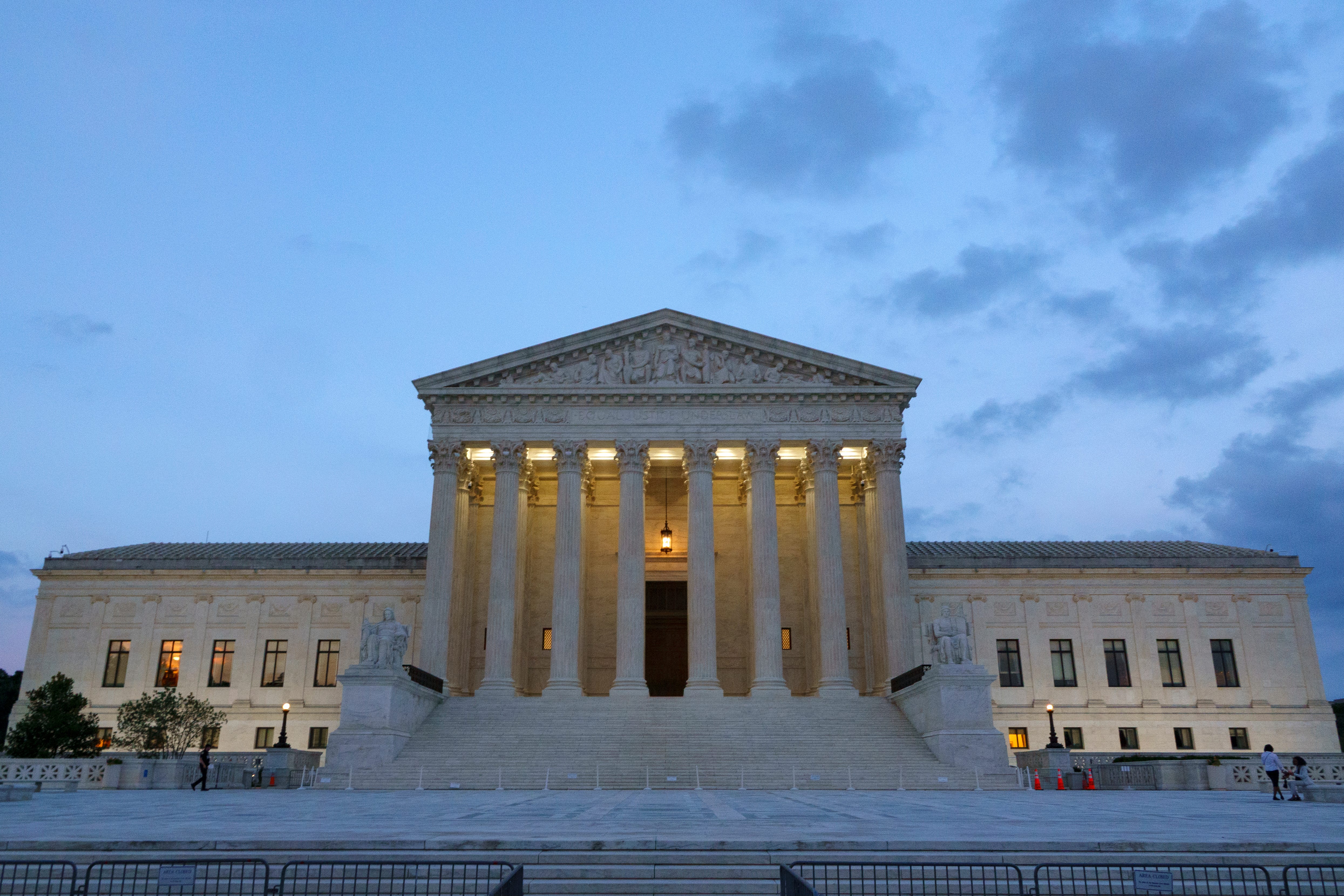
As I have written before, for Democratic candidates, running against an institution that people loathe as much as the Supreme Court is always (sorry for the political science jargon) a fucking layup. (If Donald Trump’s name earns the loudest boos on the campaign trail, I cannot imagine that Roberts is far behind.) And as it turns out, voters who have watched the Court spend the last six years soft-launching a second Redemption do not want to stop with making Clarence Thomas fill out more paperwork and/or maybe forcing Brett Kavanaugh to retire in 2036. They want reforms that will take political power away from Clarence Thomas and Brett Kavanaugh right now, and consign them to writing dissents for the foreseeable future.
Yes, this is just one poll, and yes, 53 percent is less than 89 percent (the percentage of people who told Marquette that they support an ethics code) and 79 percent (the same, for term limits). The belief that changing the size of the Supreme Court is inherently “radical” also runs deep among Democratic politicians of a certain age in Washington, who pay a perplexing amount of attention to centrist think tanks trying to reframe their policy preferences as “common sense.” For skittish purple-district candidates, Supreme Court expansion might still feel a little too Out There for comfort.
My own view is that politicians should be capable of persuading constituents of the merits of policy proposals, instead of reflexively hiding behind the biggest, safest poll numbers they can find. (Another word for this might be “leadership.”) But the more basic problem is that for as long as a six-justice conservative supermajority controls a nine-member Court, any law that a Democratic Congress passes and any executive order a Democratic president issues is going to get absolutely shredded just as soon as Sam Alito’s most revanchist clerk decides on the rationale. If you are a Democratic candidate, even if you are fortunate enough to win power this fall and then again in 2028, you are not going to be able to actually do anything with it unless you expand the Supreme Court first.
I understand that the imperative to have a position on Supreme Court reform is relatively uncharted territory for aspiring politicians. But what this Marquette poll shows is that for politicians who are on the pro side of reform right now, the issue is not a liability, but an opportunity. Voters do not like the Court, and they want representatives who will do something meaningful about it. The question is whether enough Democrats can figure that out.
If you enjoyed this post, please consider supporting the work of Balls & Strikes with a monthly or annual subscription. Click here to learn more and sign up.
You can find everything we publish by visiting ballsandstrikes.org, and by following us on Bluesky at @ballsandstrikes.org. You can get in touch by emailing us at contact@ballsandstrikes.org. Thanks for reading.
This Week In Balls & Strikes
This 30-Year-Old Antonin Scalia Dissent Could Be Disastrous For the Endangered Species Act, Amelia Ulmer
The Trump administration is trying to revive a legal theory the Supreme Court rejected that would make it harder to hold anyone accountable for the deaths of protected wildlife.
Sam Alito Wants You to Forget How the Conservative Legal Movement Always Works, Jay Willis
Conservative activists are chipping away at the Supreme Court’s decision in Obergefell because Alito told them exactly how to do it.
Congress Should Strip the Supreme Court of Its Power to Greenlight Blocked Executions, Luke Smith Morgan
If the Court will not treat cases like Christa Pike’s with the care they deserve, the American people should ensure that it can no longer stop other courts from doing so.
Oil Companies Are Begging the Supreme Court to Let Them Off the Hook For Climate Change, Madiba Dennie
State courts might be the last, best hope for holding polluters accountable.
This Week In Other Stuff We Appreciated
Vote Like Alito Is On the Ballot, Elie Mystal, The Nation
“During his media blitz, he’s said that he’ll consider retiring next year. That is a message to Republican voters: Alito is “on the ballot” this November. He’s telling voters that his seat could be up for grabs, should voters return Republicans to power in the Senate.”
Samuel Alito’s Tortured Attempts to Explain Himself, Matt Ford, The New Republic
“The book ultimately reads like a barely disguised effort by one justice to convince all of us—and perhaps even himself—that the court’s own wings aren’t melting.”
This Week In Obscure Photos of Supreme Court Justices On Getty Images
Anyone with a first-grade grasp of history knows that the nation's population, and the number of federal courts and judges has increased exponentially since lower courts were established by statute following the adoption of the Constitution.
Also, nowhere in the Constitution is there any limitation on the number of USSC justices.
Third, aside from the explosive growth in the number and complexity of issues presented to the SC, no one can deny that it has become corrosively partisan even as it has aggrandized its own authority to areas never contemplated by the Founders.
One simple -- and even possibly doable -- solution would be this: Expand the SC to 15 members. To reduce (if not eliminate) partisanship, allow each major political party to alternately appoint justices, subject to the same ratification process as is currently used.
I say it is possibly doable because it would give both parties an equal interest in ensuring that if the political tides turns, they do not find themselves on short end of a siuation like the present.
In his article about the retirement of Justice Stevens and the end of a bipartisan Court several years ago, Jeffrey Toobin prophesized, "From now on, it's just Democrats and Republicans."
I beliive my Modest Proposal could restore not only equity, but the respect for the Court that has been dashed by Roberts & Co. for years.
I’ve said it before and I’ll say it again: add 6 new justices to the court, for a total of 15. Add a 14th circuit to the court, that strictly hears cases originating overseas, and staff that circuit with judges that have experience with international law. And pull the Chief Justice off overseeing a circuit and designate him as the automatic backup for any justice who isn’t able to oversee their circuit cases, for health or recusal reasons.